The Ordinary Fantastic: Magic, Illusion, & Authentic Flim-Flam

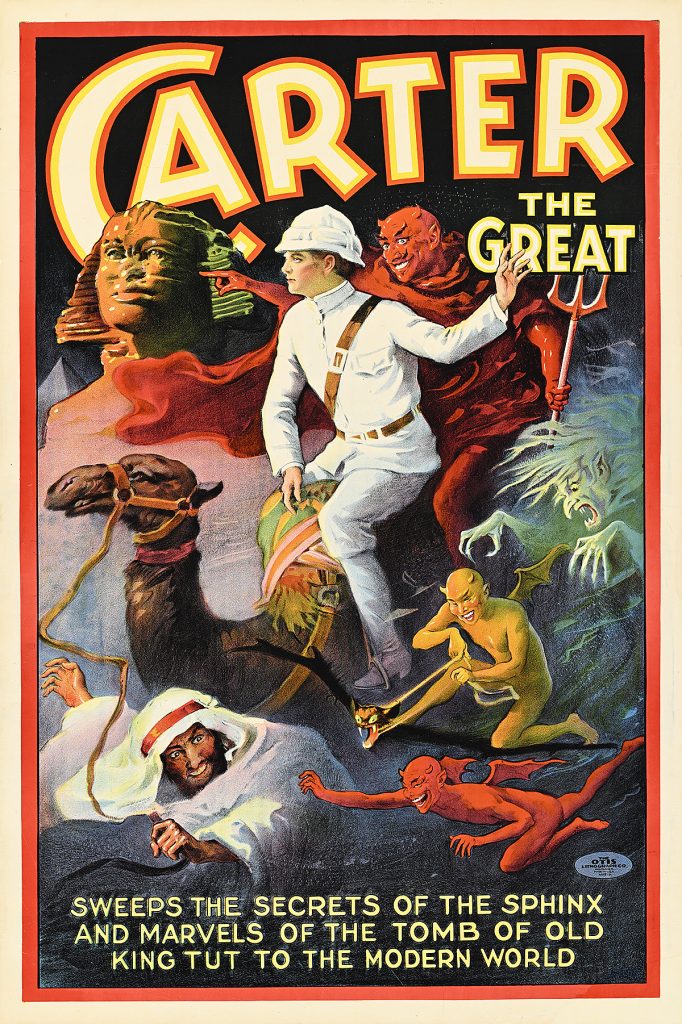
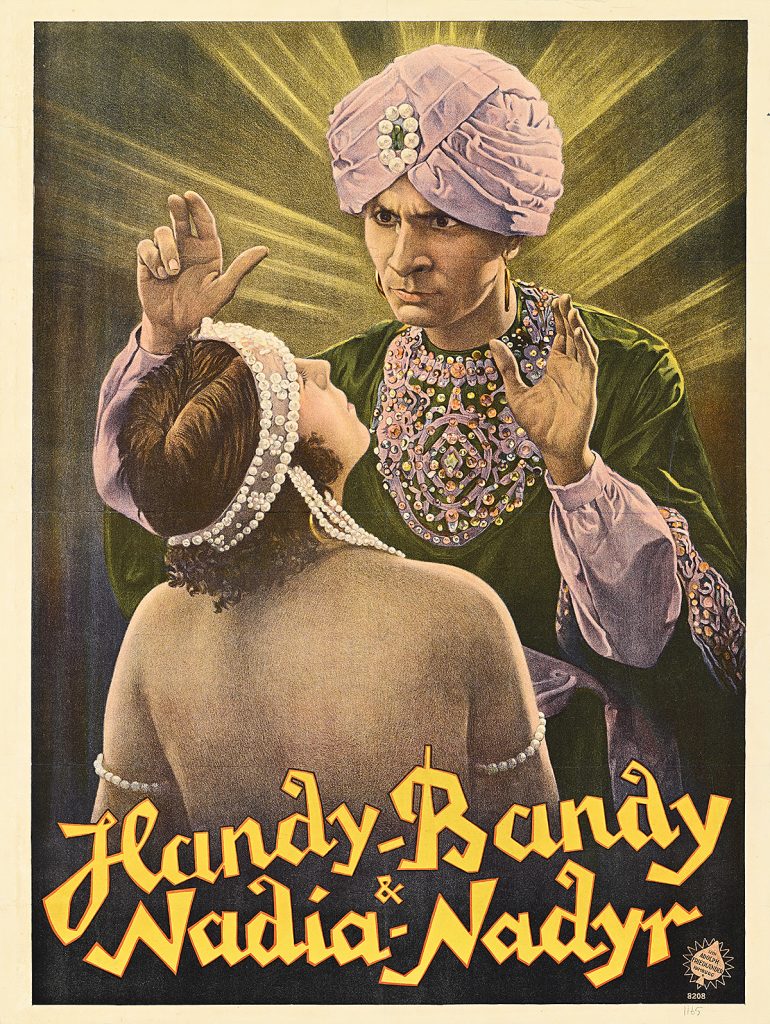
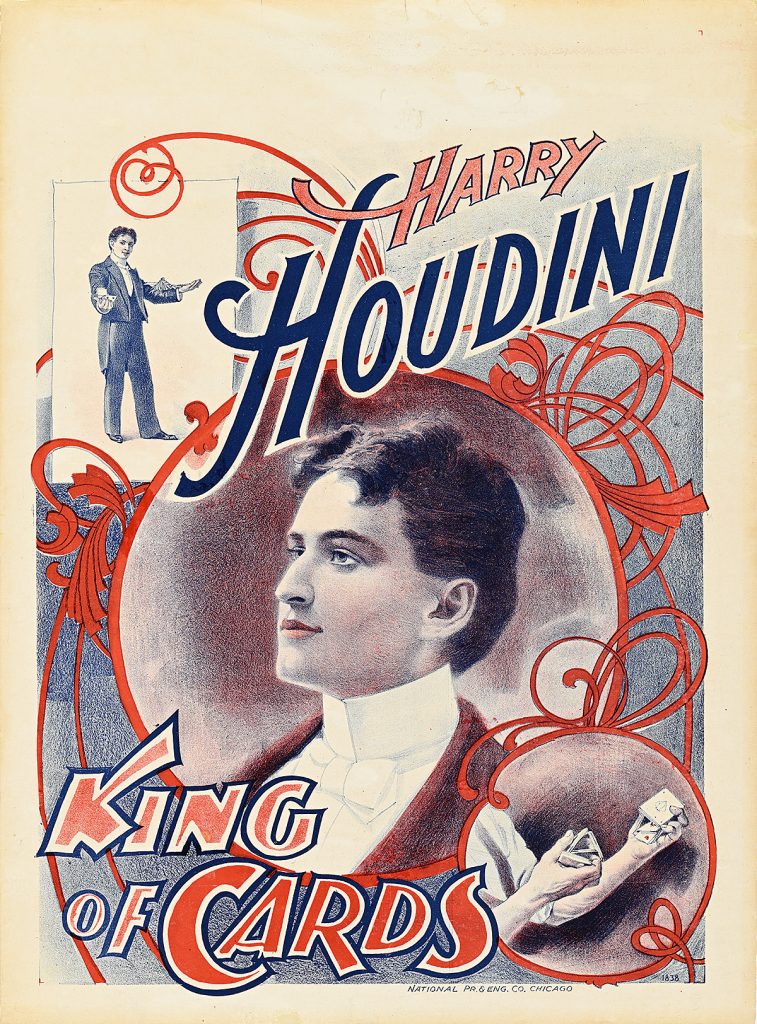
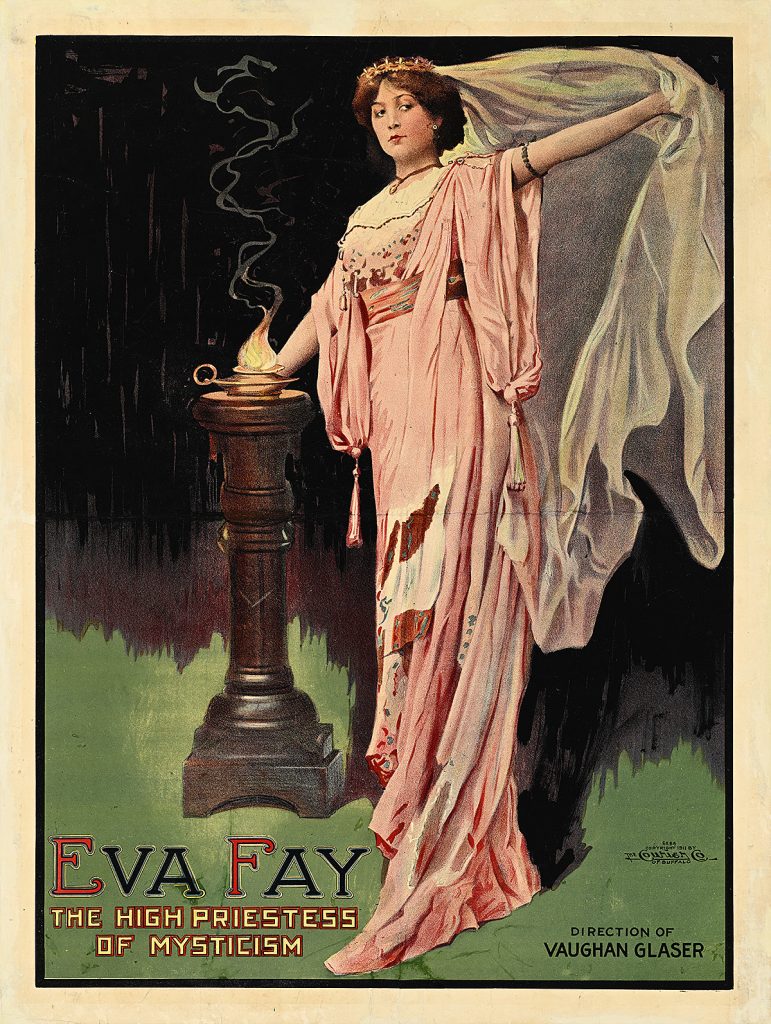
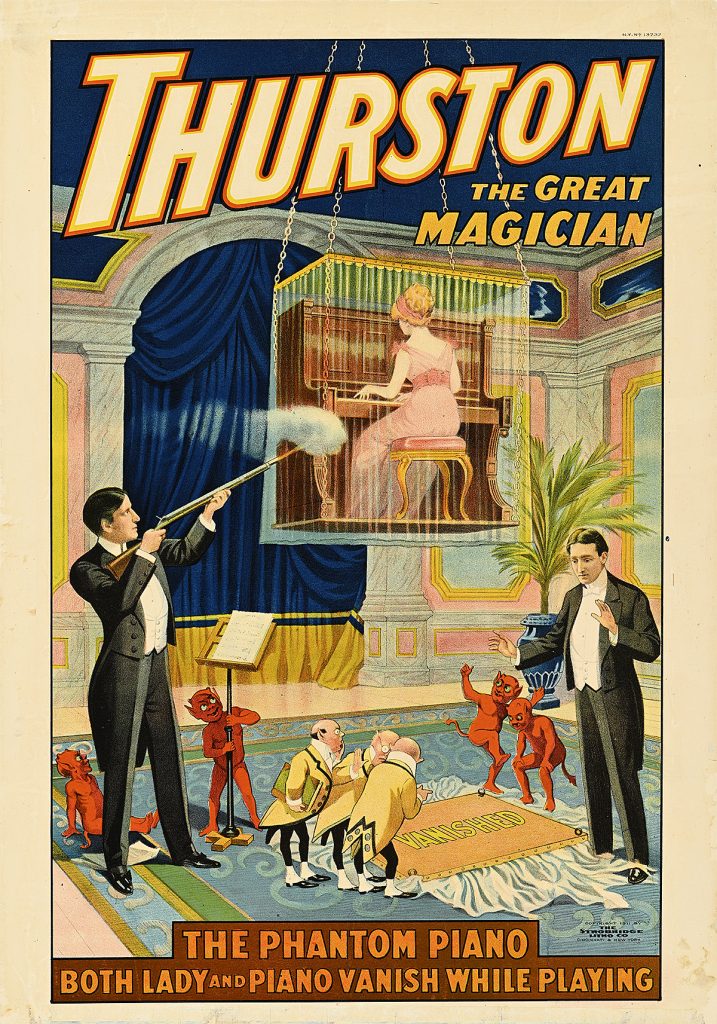
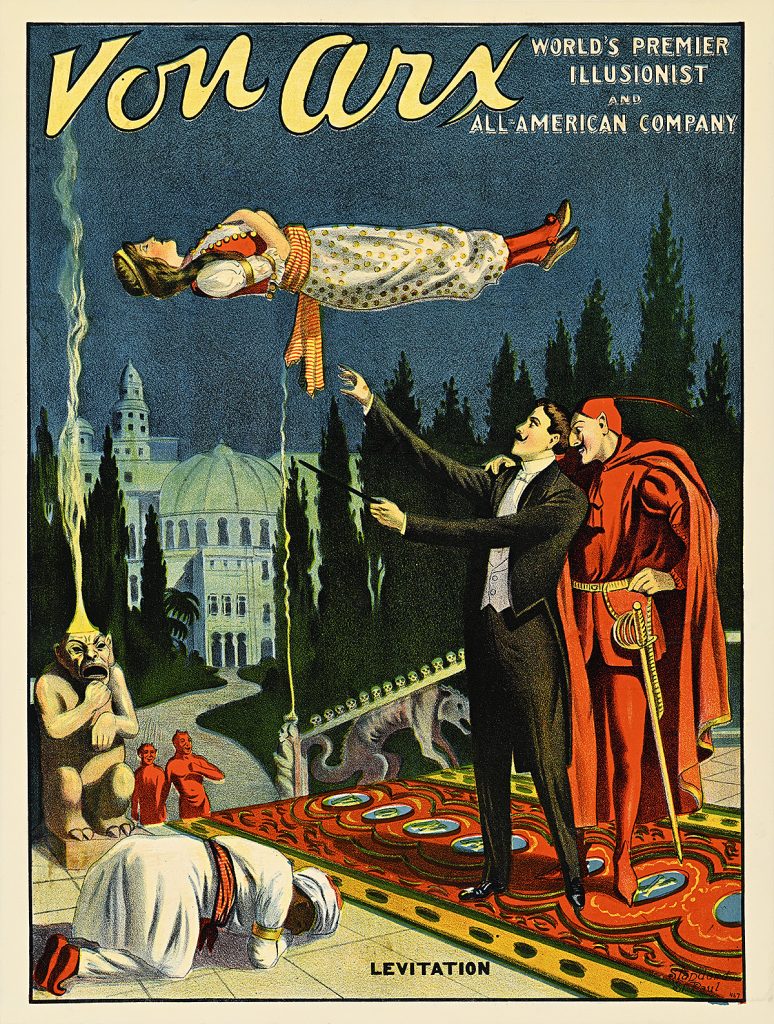
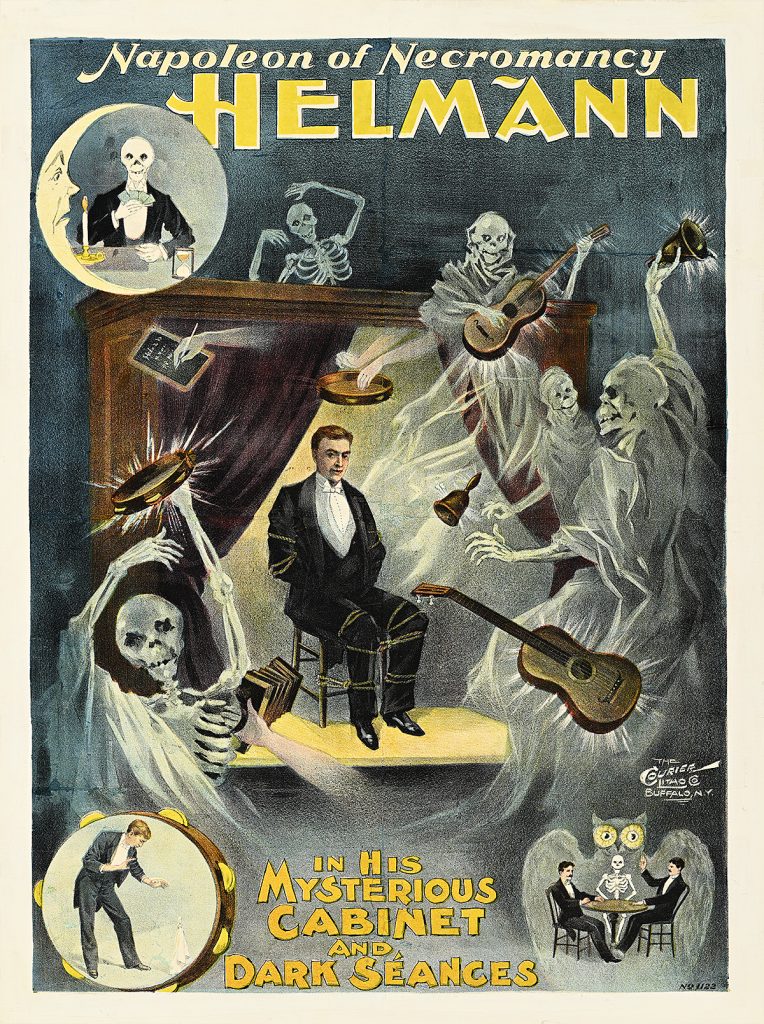
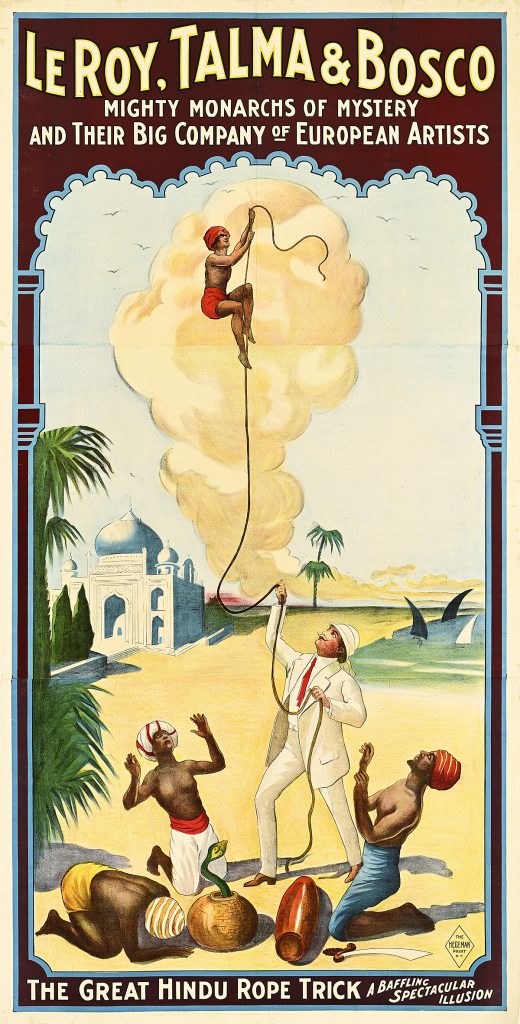
The history of magicians is one of both great artistry and tremendous deception. Magicians, trained in techniques mastered over thousands of years, were required to be good at their craft, but also good at selling it—especially as migration, industrialization, and the changing nature of theater meant performances needed to become scarier, sexier, bigger, and better.
The Golden Age of Magic began in the mid-1800s when waves of immigration brought the courtly magicians of old Europe to the new world. There they found an unfamiliar land with a greater opportunity: celebrated hucksters—in particular P. T. Barnum—had heightened the American desire for theatrical dishonesty and changed the stage forever as magicians now met audiences willing and eager to be deceived. The timing, too, was perfect: as Americans clamored for better and more entertainment, lithographic printers were ushering in the golden age of American posters—and magicians everywhere saw a chance to sell—through printed beauty—magic, illusion, and real, authentic flim-flam.
B.A. Van Sise FRGS is a photographic artist, author, and curator, primarily focused on the intersection between language and the visual form. Previously a journalist for the Village Voice and Newsday, he is also the author of Children of Grass: A Portrait of American Poetry, Invited to Life: After the Holocaust, and On the National Language: the Poetry of America’s Endangered Tongues. His work has been featured in major solo exhibitions at the Center for Creative Photography, the Peabody Essex Museum, the Woody Guthrie Center, and the Skirball Cultural Center. He has been a card-carrying member of the International Brotherhood of Magicians since 1998.
This exhibition comes to Poster House through a generous loan from Mike Caveney’s Egyptian Hall Museum in Pasadena, California.
It is supported, in part, by public funds from the New York City Department of Cultural Affairs, in partnership with the City Council, and the New York State Council on the Arts (NYSCA). Further support was also provided by Norm and Kate Meyrowitz.

Selected Images