Family Guide: Act Black: Posters from Black American Stage & Screen
This exhibition is rated PG-13. Parents and guardians should be aware that this exhibition includes:
- Racist caricatures of Black culture and of Black people, as well as posters featuring racist language.
- Posters depicting white and Black performers in blackface and/or performing minstrelsy, as well as makeup used for performing in blackface.
- A poster advertising the 1915 film Birth of a Nation that includes an idealized image of a Ku Klux Klan member.
Guiding Language
See below for recommended language when describing key terms from this exhibition to young learners. This language was created with children ages eight and up in mind.
- Blackface is when performers apply black or dark brown makeup to their faces to impersonate Black people. In the 1800s and 1900s, blackface was used in American minstrelsy. Minstrelsy is a type of performance in which performers wear blackface as they stereotype and make fun of Black people and their culture. A stereotype is an idea about what a certain group of people are like. The idea is often untrue and hurtful.
- Black actors and actresses in the 1900s challenged the racist stereotypes found in American entertainment. Theater and film performances with all-Black casts featured Black actors and actresses as the main performers. They introduced Americans to unique stories about Black people’s experiences.
Recommended Works and Guiding Questions
This exhibition is a celebration of Black theater and film performances from 1870 to 1954. During this time, Black actors, actresses, and filmmakers gained new opportunities in theater and film. This led to more stories about Black people’s experiences. However, racism and stereotyping continued in these industries.
The works below show how some of the representations of Black characters and stories were transformed over time as they moved from theater stages to film screens.
These two printed works in the exhibition are very different from each other.
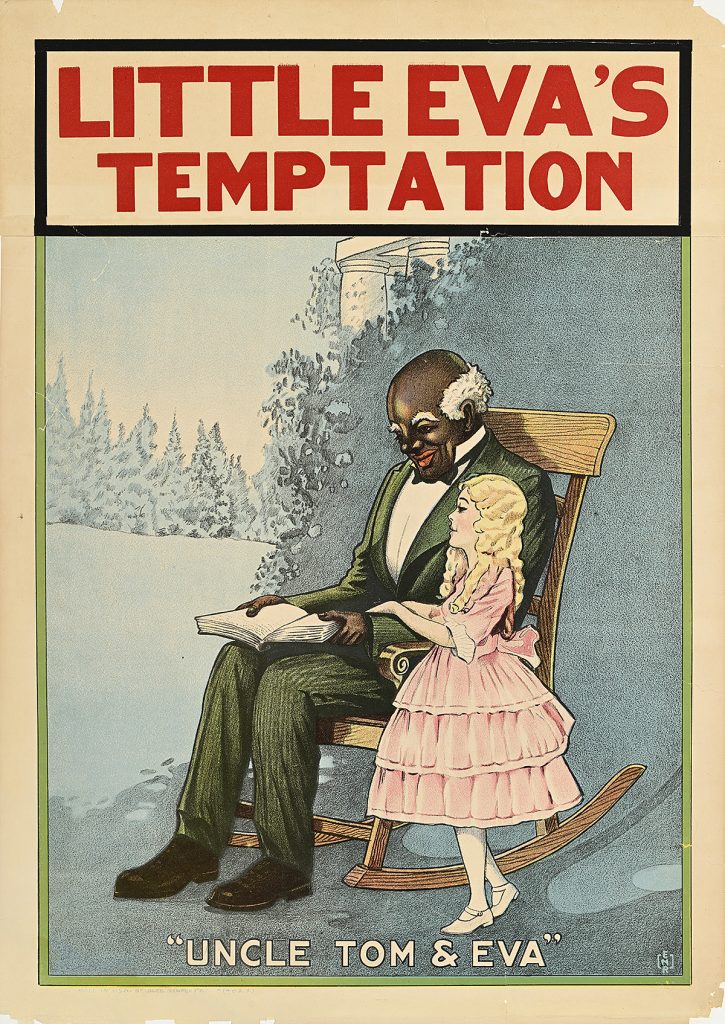
Little Eva’s Temptation, Emil Rothengatter, 1928
This poster is for a play that was inspired by the famous book Uncle Tom’s Cabin. While the scene on the poster seems happy and calm, the character of Uncle Tom is a stereotype of a Black person. He is obedient and meek even when he is treated unfairly.
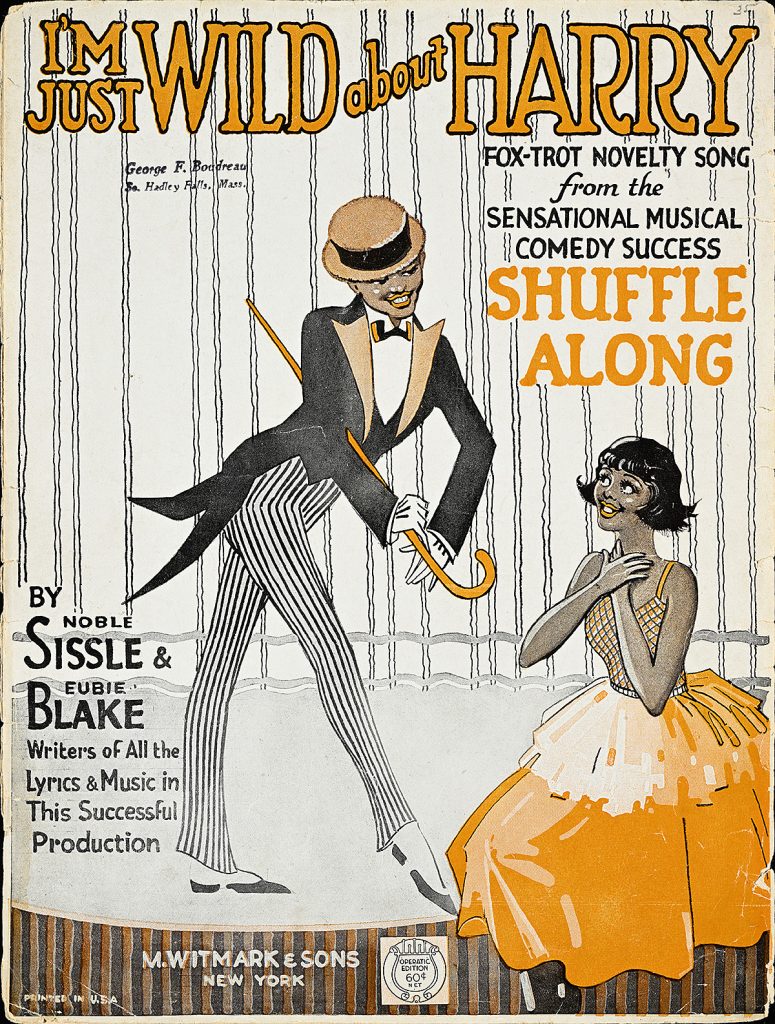
Shuffle Along, William Austin Starmer and Frederick Waite Starmer, 1921
This sheet music is for a Broadway musical called Shuffle Along. This was one of the most successful and popular all-Black theater performances of the 1920s. Shuffle Along was a turning point in Black theater. It showed Black and white audiences a new and more lively view of Black life that was different from what they usually saw in shows with only white performers.
Look closely at the scenes in both examples. Think about how Shuffle Along shows a more vibrant picture of Black life and experiences than the scene in the poster inspired by Uncle Tom’s Cabin.
- How are the characters’ poses in Shuffle Along different from the characters’ poses in the Uncle Tom poster? What seems different about their emotions?
- How is the scene in Shuffle Along different from the one in the Uncle Tom poster?
In 1915, the film Birth of a Nation was released. It was a racist film that supported slavery and encouraged harmful stereotypes. Many Black filmmakers and actors wanted to challenge the stereotypes in films like Birth of a Nation by making films that presented complex and interesting Black characters. Some of these films were about race but they were most importantly about the diverse experiences of Black people in America.
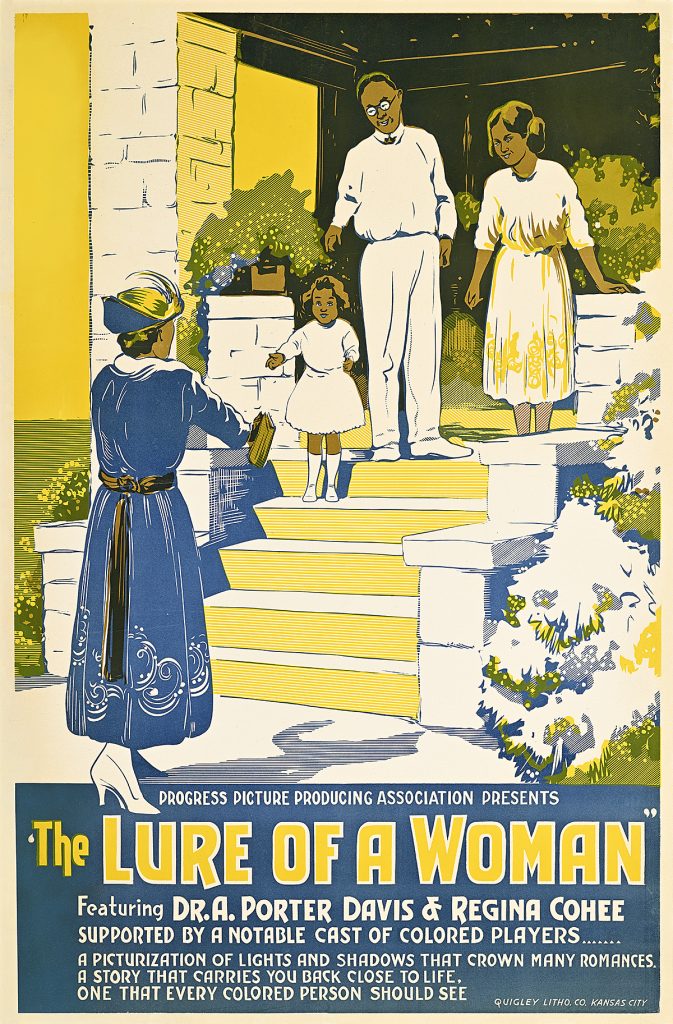
The Lure of a Woman, Unknown Designer, 1921
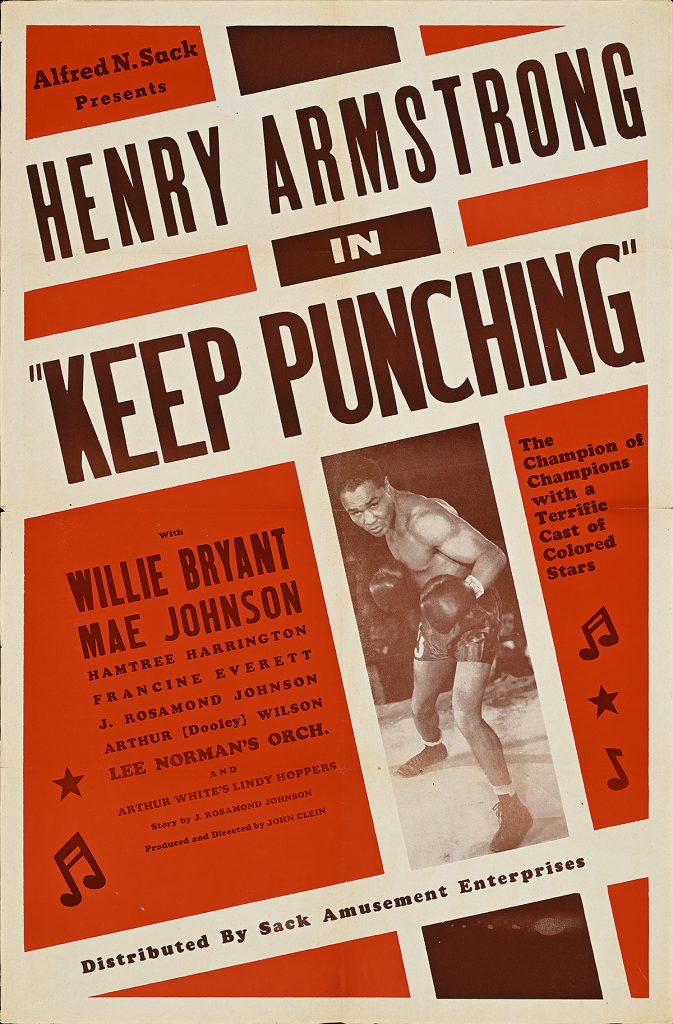
Keep Punching, Unknown Designer, 1921
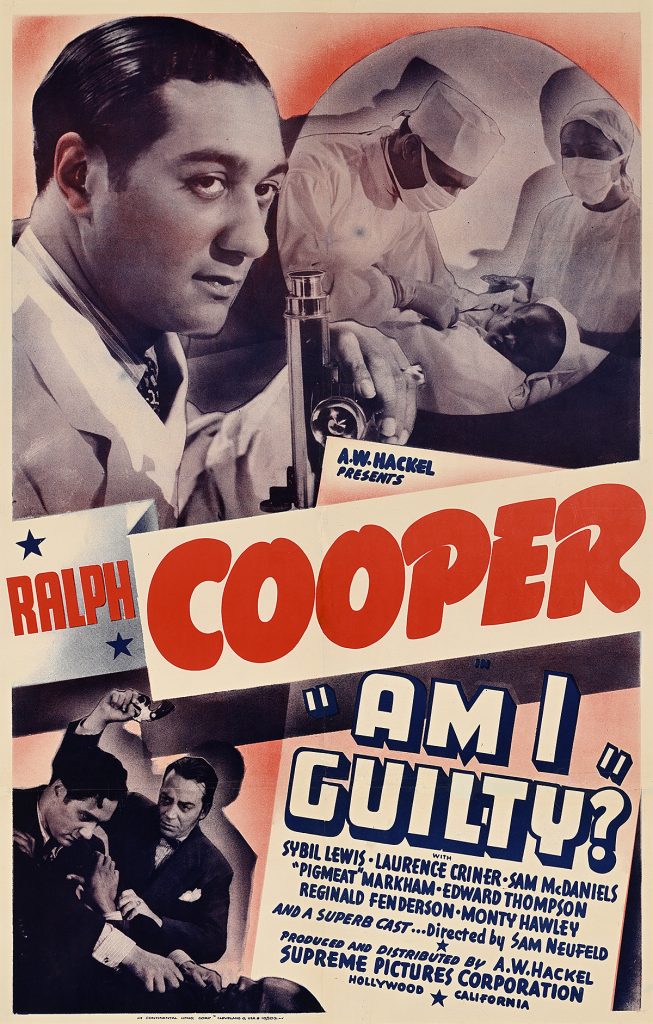
Am I Guilty?, Unknown Designer, 1941
Look at the posters for the films shown here. These filmmakers wanted to show Black characters who felt real: they have their own life experiences that shape the way they act in the story.
- Who is the main character in each story? How can you tell?
- What do you think each main character’s back-story is? What kind of personality do they seem to have?
- If you had to create your own story character, what would their personality be? You can ask yourself these questions:
- What makes your character happy? What makes them sad?
- What does your character want more than anything, and why?
- What is something they struggle to do? What is something they are good at doing?
- What makes your character happy? What makes them sad?
Harlem, a neighborhood in New York City, was very important in the history of Black theater and film. It was the place where some of the most popular Black plays and musicals were written and performed. In the 1920s, Black culture and art was thriving in Harlem.
Take a look at these three posters for different movies. All of these films have the word “Harlem” in their titles–but each one is in a different genre. A genre is a category of films with the same kinds of stories or themes, or in the same style.
- There are three film genres here: Drama, Western, and Crime. Can you match the genre to the movie poster?
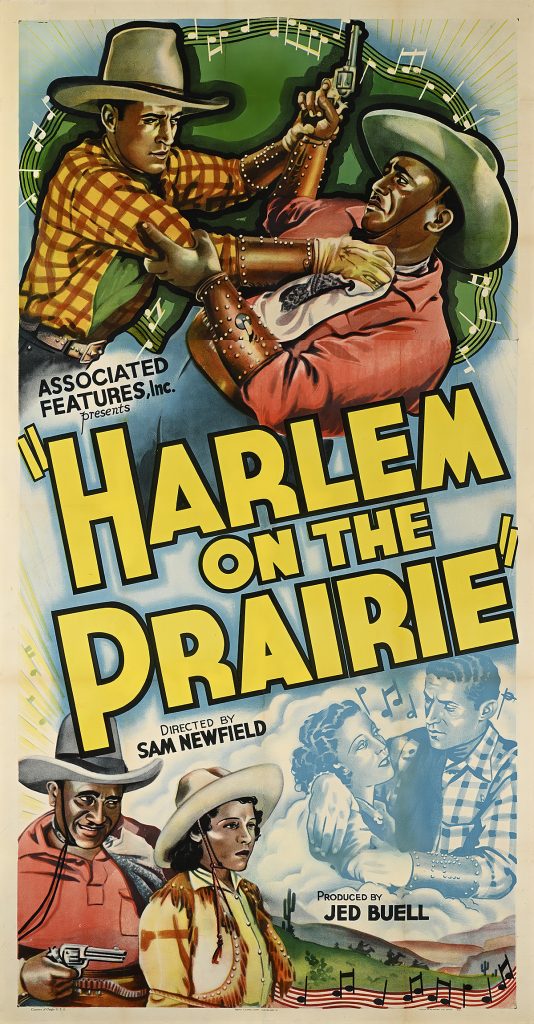
Harlem on the Prairie, Unknown Designer, 1937
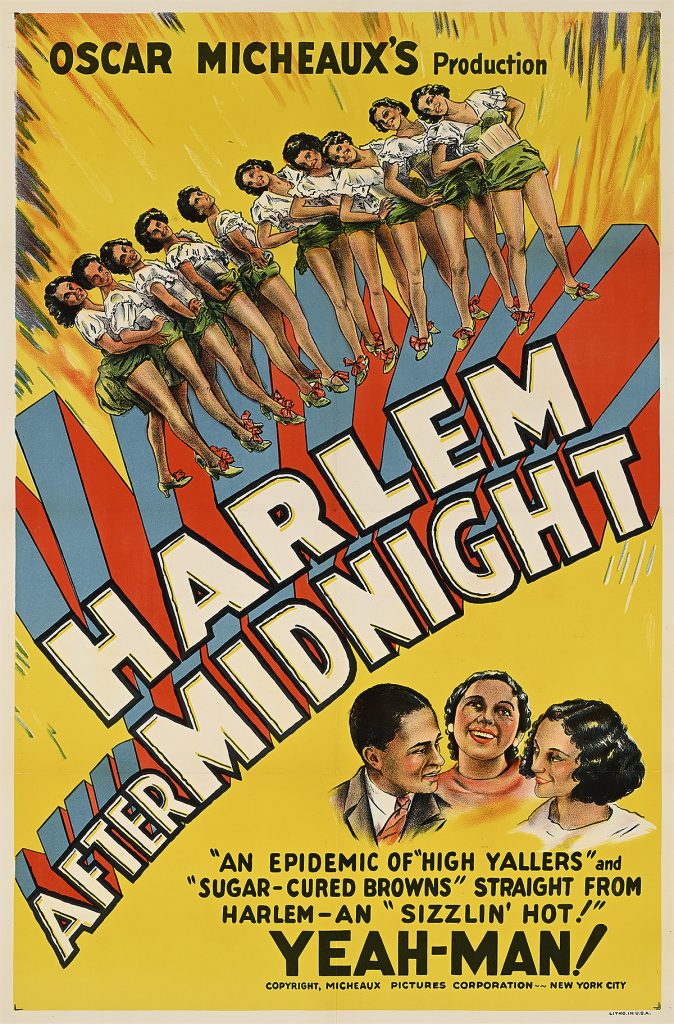
Harlem After Midnight, Unknown Designer, 1934
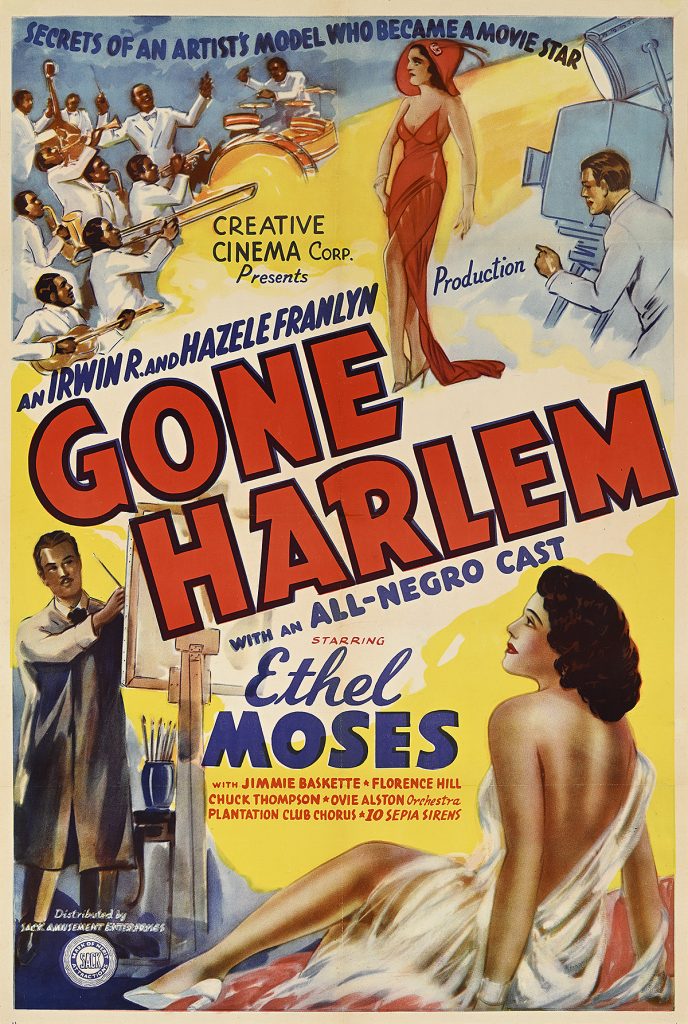
Gone Harlem, Unknown Designer, 1938
- Think of your own film title that includes a place name that is important to you—it could be your neighborhood, your hometown, or even your favorite place. What would the title be?
- Some movies, like Harlem on the Prairie, used “Harlem” in their titles even though the film did not take place there. Why do you think the word “Harlem” might make a film sound exciting or interesting?
Additional Resources
- For further guidance, sign up for the free Poster Kids event(s) related to this exhibition. Poster House’s educators are trained to facilitate age-appropriate discussions around a diverse range of topics.
- Looking for hands-on activities? This exhibition is accompanied by an interactive, family-friendly handout. Visit the museum for the full experience!
Join the Education Newsletter to get notified!
JOIN EDUCATION NEWSLETTER